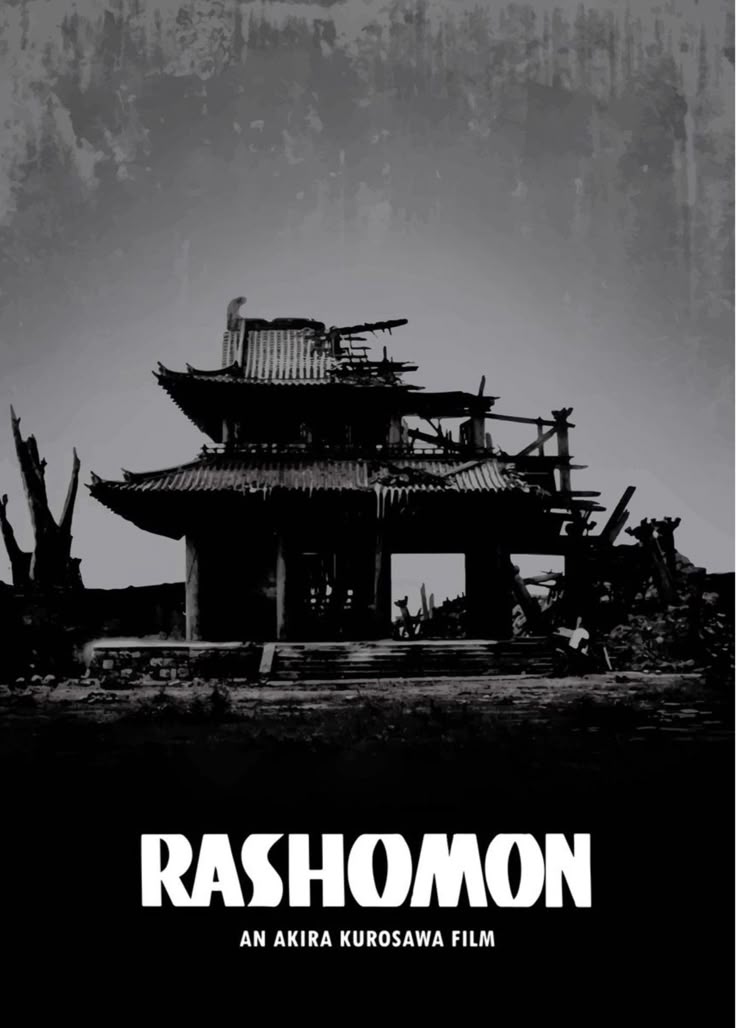
In 1950, Akira Kurosawa released Rashomon, a film that would fundamentally alter how we think about truth, memory, and narrative reliability. The story is deceptively simple: four people witness the same violent incident in a forest, and each tells a dramatically different version of what happened. But the implications of this structure were so profound that “the Rashomon effect” entered psychology, law, and philosophy as a term for the subjectivity of truth. Yet despite spawning an entire conceptual framework, the narrative technique itself remains curiously rare in cinema. Why has one of the most powerful storytelling tools ever created been so consistently underutilized?
The Original Innovation
Rashomon didn’t invent multiple perspective storytelling—literature had explored it for centuries, and films like Citizen Kane (1941) had used shifting viewpoints to build a complex portrait. But Kurosawa did something radical: he made the contradictions irreconcilable. The different accounts in Rashomon don’t just emphasize different details or interpret events differently—they describe fundamentally different events. One person’s villain is another’s victim. Heroic actions in one version become cowardice in another.
The genius lies in what Kurosawa refuses to do: he never tells us which version is true. There’s no omniscient narrator, no objective camera revealing the “real” events. The audience must sit with the uncomfortable reality that truth, in this story, is fundamentally unknowable. Each narrator is simultaneously reliable and unreliable, honest and self-deluding.
This structure creates a unique viewing experience. Instead of following a story, audiences must actively construct meaning from contradictory information. The film becomes an epistemological puzzle where the goal isn’t to solve the mystery but to understand why it can’t be solved. This is infinitely more sophisticated than standard unreliable narrator techniques, which typically build toward a revelation of “true” events.
The Structural Challenge
The reason so few films successfully employ the Rashomon effect becomes clear when you consider the structural challenges. Most narratives are built on causality—this happened, therefore that happened. Multiple contradictory perspectives destroy causality. If we can’t agree on what happened, we can’t establish cause and effect, which means we can’t build traditional dramatic tension.
Moreover, the technique requires audiences to hold multiple incompatible realities in their minds simultaneously. This is cognitively demanding. Most viewers come to cinema for escapism, not epistemological philosophy. They want to be told a story, not forced to adjudicate between conflicting accounts of a story. The Rashomon structure demands active, analytical viewing in a medium designed for passive consumption.
There’s also the repetition problem. To show the same event from multiple perspectives means showing the same event multiple times. This risks boring audiences, who understandably might feel they’re watching the same scene repeatedly. Directors must find ways to make each iteration fresh while maintaining enough similarity that we recognize them as versions of the same event. It’s a nearly impossible balance.
Successful Implementations
When filmmakers do attempt the Rashomon effect, they often simplify it to make it more palatable. Courage Under Fire (1996) uses multiple perspectives to investigate a Medal of Honor case, but it ultimately reveals which account is true, converting the Rashomon structure into a more conventional mystery. The contradictions aren’t irreconcilable—they’re puzzles waiting to be solved.
Hero (2002), Zhang Yimou’s wuxia epic, uses the structure more faithfully. Different colored sections of the film present different versions of an assassination attempt, each contradicting the previous one. Like Rashomon, it refuses simple resolution. But Hero adds a new element: political propaganda. Some versions are deliberately false, created to deceive. This adds another layer—now we’re dealing not just with subjective truth but with intentional manipulation.
Gone Girl (2014) offers a particularly twisted take on the form. The first half presents events from Nick’s perspective, establishing him as a potentially murderous husband. Then Amy’s diary reveals a completely different story—before revealing that the diary itself is a fabrication designed to frame Nick. The Rashomon structure becomes a weapon, showing how easily narrative control translates to reality control.
The Cognitive Psychology
Research into eyewitness testimony has repeatedly confirmed what Kurosawa dramatized: people genuinely remember the same event differently, and each person’s memory feels equally true to them. We don’t just interpret events differently—we literally encode different memories based on our attention, expectations, and emotional state during the event.
This creates a fascinating paradox for cinema. Film is typically considered an objective medium—the camera captures what’s really there. But the Rashomon structure reveals that even this “objective” recording is subjective based on what the camera chooses to show, how it frames events, and what it omits. Every perspective is simultaneously true (it’s what the camera captured) and false (it’s not the complete picture).
The technique also engages with memory’s reconstructive nature. We don’t retrieve memories like files from a computer—we reconstruct them each time, influenced by subsequent events, social pressure, and self-image. Each retelling in Rashomon isn’t just a different perspective on the original event; it’s a different reconstruction of that event, shaped by the narrator’s need to see themselves in a particular light.
Why It’s Underused: The Control Problem
The fundamental reason the Rashomon effect remains rare is that it requires directors to surrender control. Traditional filmmaking is about guiding audiences to specific emotional and intellectual responses. You want them to sympathize with this character, fear this threat, understand this theme. The Rashomon structure deliberately fractures that control.
When you present irreconcilable perspectives without indicating which is correct, you’re asking audiences to make their own judgments. Different viewers will believe different accounts based on their own biases and experiences. This means the film will have fundamentally different meanings for different people—not just different interpretations of the same meaning, but actually different narratives.
For directors who view filmmaking as authorial expression, this loss of control is unacceptable. The film might communicate something the director didn’t intend, or worse, fail to communicate what they did intend. The Rashomon structure turns audiences into co-authors, and not all filmmakers want co-authors.
The Commercial Risk
Studios are understandably wary of the technique. It’s difficult to market (“See the same scene four times with different outcomes!”), it risks confusing or frustrating audiences, and it doesn’t fit neatly into genre categories. Is Rashomon a crime film? A philosophical drama? A period piece? All and none of these.
Moreover, the technique is inherently downbeat. If truth is unknowable and everyone’s perspective is equally valid or invalid, where’s the catharsis? Where’s the satisfaction? Audiences generally want resolution, even if it’s tragic. The Rashomon effect offers ambiguity instead, which doesn’t test well with focus groups.
There’s also the spoiler problem. Once audiences understand the structure—that they’re going to see multiple contradictory versions—the impact of each new perspective diminishes. The first shift might shock them, the second intrigues them, but by the third or fourth, they’re expecting it. The technique consumes its own surprise.
Television’s Better Fit
Interestingly, the Rashomon effect has found more success in television than film. The series format allows for more gradual revelation and can dedicate entire episodes to individual perspectives without the repetition feeling as compressed. The Affair (2014-2019) built its entire structure around this, with each episode split between the two protagonists’ perspectives on their relationship, deliberately showing contradictory versions of conversations and events.
The longer format allows television to explore something film usually can’t: how perspectives shift over time. In The Affair, early seasons show minor discrepancies that gradually widen into massive gaps as the characters’ memories become increasingly colored by subsequent events. This temporal dimension adds new depth to the technique.
The Digital Age Implications
The Rashomon effect has gained new relevance in our current era of “fake news,” social media echo chambers, and competing realities. We’re living through a cultural moment where different groups maintain fundamentally different understandings of the same events, each backed by “evidence” and “eyewitness accounts.” Kurosawa’s 1950 film about the impossibility of objective truth feels more timely than ever.
Yet filmmakers still largely avoid the technique, perhaps because it hits too close to home. When reality itself feels like a Rashomon scenario—when people can’t agree on what happened at political events, during protests, or in viral videos—do audiences want cinema to emphasize this uncertainty, or escape from it?
The Moral Dimension
One reason directors might avoid the Rashomon effect is its moral implications. If all perspectives are equally valid, does that mean all actions are equally justified? If we can’t determine objective truth, how do we assign blame or praise? The technique risks moral relativism, suggesting that justice is impossible because truth is unknowable.
Kurosawa himself seemed troubled by this implication. Rashomon includes a framing story where the characters debate whether the contradictory accounts mean that human nature is fundamentally selfish and deceitful. The film ends with a small act of kindness—caring for an abandoned baby—that suggests hope despite the uncertainty. But this moral rescue mission doesn’t fully resolve the epistemological crisis the film creates.
Technical Limitations
Practical filmmaking also plays a role in the technique’s rarity. Shooting the same sequence multiple times with different outcomes is expensive and time-consuming. Each version requires its own blocking, cinematography, and performance. In an industry increasingly focused on efficiency and budgets, the Rashomon structure is a luxury many productions can’t afford.
Moreover, actors must perform the same scene multiple times with different motivations and outcomes, which is enormously challenging. They must make each version feel authentic and complete, not like variations on a theme. This requires exceptional skill and directorial control—the actors need to understand not just their character in each version, but why their character would remember or present events differently.
When It Works Best
The Rashomon effect succeeds most powerfully when the story itself is about the nature of truth and perception. Rashomon works because it’s fundamentally a philosophical inquiry dressed as a crime story. The contradictions aren’t obstacles to understanding—they’re the point.
Films that use the structure superficially, as a clever plot device without thematic justification, tend to feel gimmicky. The multiple perspectives should reveal something essential about human nature, truth, or perception. If they’re just showing us different angles on the same mystery that will eventually be solved, they’re wasting the technique’s potential.
The Future
As audiences become more sophisticated and media-literate, perhaps the Rashomon effect will find new life. We’re increasingly comfortable with narrative complexity, non-linear storytelling, and ambiguous endings. The success of shows like Westworld and Russian Doll, which play with perception and reality, suggests audiences can handle more challenging narrative structures than Hollywood typically assumes.
Virtual reality and interactive media might offer new possibilities for the technique. Imagine a VR experience where you could literally choose which perspective to follow, moving between different characters’ experiences of the same event in real-time. The technology could finally catch up to Kurosawa’s vision, allowing audiences to explore subjectivity and truth in genuinely interactive ways.
The Essential Loneliness
Ultimately, the Rashomon effect remains underused because it’s a profoundly lonely technique. It forces us to confront the isolation of individual consciousness—the fact that no one can truly share your experience of reality. Every person lives in their own subjective world, and communication between these worlds is always imperfect, always distorted.
Cinema typically works against this loneliness, creating shared experiences that connect audiences. The Rashomon effect does the opposite. It emphasizes disconnection, the impossibility of truly understanding another person’s reality. This is philosophically important but emotionally difficult. We watch movies in part to feel less alone. The Rashomon effect reminds us that we are, in some fundamental sense, always alone in our perception.
Conclusion
The Rashomon effect is cinema’s most powerful tool for exploring truth, memory, and perception. It’s also one of its most demanding—requiring sophisticated audiences, brave filmmakers, patient studios, and talented actors. These requirements explain its rarity but don’t justify it.
We need more films willing to embrace the technique, to trust audiences with ambiguity and contradiction. In an era when competing versions of reality threaten to tear societies apart, we need art that helps us understand how good people can genuinely perceive the same events differently. We need stories that don’t just show us different perspectives, but help us comprehend why those perspectives are irreconcilable.
Kurosawa gave us the blueprint seventy-five years ago. The question isn’t whether cinema can handle this kind of storytelling—Rashomon proved it can. The question is whether we have the courage to use it more often, even knowing that some audiences will be frustrated, some critics confused, and some studios nervous. The technique demands something uncomfortable from everyone involved: the willingness to live with uncertainty.
But perhaps that discomfort is exactly what we need. Perhaps the most important stories are the ones that don’t resolve neatly, that force us to sit with contradiction and ambiguity. Perhaps the Rashomon effect is cinema’s most underused tool precisely because it’s one of its most necessary.
The next time you watch people argue about “what really happened” in a movie, consider: maybe they’re both right. Maybe the film is working exactly as intended, creating multiple valid readings that can’t be reconciled. Maybe instead of asking “who’s correct?” we should ask “why do we need there to be one correct answer?” That’s the question Kurosawa posed seventy-five years ago. We’re still avoiding it.
Leave a Reply