Most film buffs can name the obvious examples of reverse chronology in cinema—Memento, Irreversible, Betrayal. These films announce their backward structure as a central gimmick, a puzzle for audiences to solve. But what about the films that subtly weave reverse storytelling into their fabric without you ever consciously noticing? These are the movies that use temporal manipulation not as a headline feature, but as a psychological weapon.
The Invisible Reversal
Traditional reverse-chronology films make their structure obvious from the opening frames. But a more sophisticated breed of filmmaker embeds reverse sequences within conventional narratives, creating cognitive dissonance that viewers feel but cannot articulate. This technique operates on the viewer’s subconscious, generating unease, nostalgia, or prophetic dread without revealing its mechanism.
Consider Harold Pinter’s original stage play Betrayal, later adapted to film by David Jones in 1983. The story moves backward through a love affair, but the genius lies in how each scene feels like it’s moving forward emotionally. We experience the relationship’s death before its birth, yet our emotional investment deepens rather than diminishes. The reversal isn’t a gimmick—it’s the point. We’re watching characters become strangers, and that backward trajectory mirrors how memory actually works when relationships end.
Structural Sleight of Hand
Some directors use what I call “nested reversal”—sequences within a forward-moving narrative that actually unfold backward. François Ozon’s 5×2 (2004) presents five key moments in a marriage in reverse order, from divorce to first meeting. But within each segment, time moves forward. This creates a fascinating dual consciousness: we’re simultaneously moving backward through the relationship’s timeline while experiencing each moment’s internal logic moving forward.
The psychological effect is devastating. By the time we reach the couple’s first meeting—which should feel hopeful and romantic—we’ve already witnessed the poison that will destroy them. That first kiss becomes a tragedy in waiting. The reversal doesn’t just recontextualize the story; it fundamentally alters how we process romantic optimism itself.
The Memory Machine
Christopher Nolan has built a career on temporal manipulation, but his most subtle use of reverse chronology appears in The Prestige (2006). The film’s structure mirrors its central metaphor: a magic trick’s three parts—the pledge, the turn, and the prestige. But watch closely, and you’ll notice that certain revelations about the past are actually structured in reverse, with Nolan showing us the “prestige” before revealing the “pledge” and “turn” that made it possible.
The Tesla machine sequences operate on multiple temporal planes simultaneously. We see the final horrifying result of the technology before we understand how it was developed. When Angier demonstrates the machine’s power, we’re watching the endpoint of a process that will be explained in fragments, out of order, throughout the rest of the film. This isn’t accidental—it’s structural sorcery designed to make the audience experience the same disorientation that the characters feel.
Reverse Flashbacks: The Anti-Memory
Traditional flashbacks move forward through past events. But some filmmakers have experimented with flashbacks that move backward—showing us the end of a past event before its beginning. This creates what film theorist Svetlana Boym called “reflective nostalgia”—a longing not for the past as it was, but for the past as we wish to remember it.
In Andrei Tarkovsky’s The Mirror (1975), memories don’t follow chronological order within their own timeframes. A childhood memory might begin with its emotional climax and work backward to its mundane origin. This mirrors how actual memory functions under emotional distress—we often remember the feeling of an event before we remember the event itself.
Terrence Malick employs similar techniques in The Tree of Life (2011). The film’s memory sequences don’t progress forward through childhood; they spiral and loop, sometimes moving backward through emotional states even as they appear to move forward in time. A moment of grace is remembered before the sin that made grace necessary. The effect is dreamlike, meditative, and deeply unsettling.
The Prophetic Reversal
Some films use reverse chronology to create false prophecy—making the past feel like the future. In Arrival (2016), Denis Villeneuve presents what appear to be flashbacks to Louise’s daughter, only to reveal that these are actually flash-forwards. But even after this revelation, the temporal ambiguity persists. Are we watching the future in reverse? Is Louise remembering or predicting?
This technique transforms the viewing experience into something approaching clairvoyance. We’re not just watching a story unfold; we’re experiencing time as Louise experiences it after learning the heptapod language—all at once, with no clear distinction between past, present, and future. The film’s structure embodies its philosophical premise.
Why It Works (When It Works)
Subtle reverse chronology succeeds because it exploits how human consciousness actually processes time. We don’t experience life as a linear sequence of events. We jump backward and forward constantly, recontextualizing past events with present knowledge, projecting future anxieties onto current moments.
Films that use hidden reverse structures tap into this cognitive reality. They feel more truthful than conventional chronology because they mirror the chaos of actual consciousness. When done well, viewers don’t consciously recognize the technique—they simply feel that the film has captured something essential about how memory and anticipation actually work.
The Failure Mode
Of course, many films attempt subtle reverse chronology and fail spectacularly. The technique only works when it serves the story’s emotional or philosophical core. When it’s purely stylistic—a clever trick with no thematic justification—audiences sense the manipulation and reject it.
The key difference: successful reverse chronology makes the viewer feel smarter, as if they’ve intuited something profound about the story’s meaning. Failed reverse chronology makes viewers feel tricked, as if the filmmaker has been withholding information for no reason other than to seem clever.
The Future of Backward Storytelling
As audiences become more sophisticated and attention spans fracture across multiple media, we’re seeing more experimentation with non-linear structures that hide their mechanisms. Streaming platforms, with their binge-watching model, enable even more complex temporal manipulations because viewers can immediately rewatch and decode patterns.
The most exciting frontier isn’t films that announce their reverse structure, but films that embed it so deeply into their narrative DNA that viewers debate for years whether it’s even there. These are the films that understand something crucial: the best temporal manipulation doesn’t make you marvel at the filmmaker’s cleverness—it makes you question your own experience of time itself.
In the end, these invisible reversals don’t just tell stories backward. They rewire how we understand causality, memory, and meaning. They prove that in cinema, as in life, sometimes the only way forward is through the past—even if we have to walk it backward to get there.
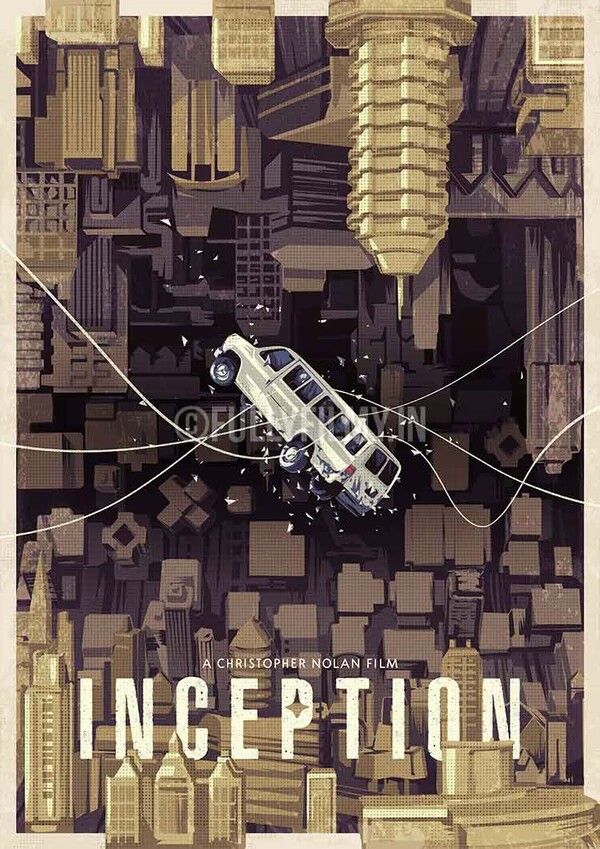
What films have you watched that felt temporally “off” without you being able to identify why? The next time a movie leaves you with that peculiar sensation of narrative déjà vu, look closer. You might be experiencing the reverse inception—a story that’s been telling itself backward all along, waiting for you to notice.
Leave a Reply